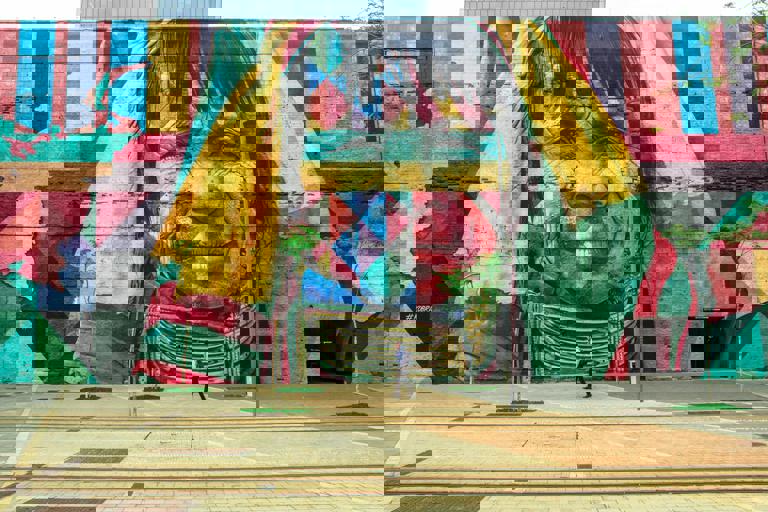
A freshly painted mural stretching across the side of an apartment building has become both a focal point and a flashpoint for a lively debate about public art versus graffiti. The mural features a vivid explosion of color with abstract shapes and subtle nods to local culture. Some residents marvel at the creativity on display, while others question whether such large-scale art projects have a place in their otherwise traditional neighborhood.
Supporters applaud the mural as an inspiring addition that brightens up an otherwise drab concrete wall. “It brings life to the block and makes us proud of where we live,” said local resident Emily Chen, who stops to photograph the piece on her morning walks. According to advocates, public murals foster community pride, invite conversation, and make neighborhoods more walkable and visually appealing.
However, critics raise concerns about the mural’s origins and legality. Some wonder if the project received proper approval from city authorities. “We’re not against art, but there’s a process for these things,” noted Robert Garland, a member of the neighborhood association. Detractors worry that what begins as community art could blur lines with unauthorized graffiti, setting a precedent for less desirable forms of expression.
The property owner, who commissioned the mural, insists all permits and permissions were secured. In a statement, she explained the intent was to catalyze positive energy and deter tagging, an issue that had plagued the wall for years. “Artists have a unique ability to transform problem areas into works of beauty,” she said, emphasizing her belief that the mural would reduce vandalism rather than encourage it.
Experts in urban planning often cite research supporting the idea that murals can serve as a deterrent to graffiti. According to an analysis by Canadian art advocacy group MuralRoutes, neighborhoods featuring large, well-maintained artwork report fewer incidents of illegal graffiti. Yet, detractors remain unconvinced, arguing that such projects could encourage a slippery slope, inviting unsanctioned art elsewhere.
Younger residents especially appear divided, with some seeing the mural as a symbol of progress and inclusivity, while others worry about gentrification and loss of neighborhood character. University student Omar William commented, “It’s exciting, but I also wonder if this is just making our area attractive for developers rather than its long-term residents.” Changes brought by such public art can generate mixed emotions regarding identity and belonging.
At the city level, officials have stepped in to clarify existing regulations regarding public murals and graffiti. City councilor Aisha Patel explained in a recent interview, “Permits for murals are an essential part of keeping public spaces vibrant and legal. We encourage community engagement in art, but there’s a distinction between sanctioned projects and vandalism.” The city has promised to review guidelines following feedback from residents.
Art historians point to a rich tradition of public murals throughout Canadian cities, underscoring their role in storytelling and cultural exchange. Dr. Heather Lyons of the Canadian Institute for Urban Culture said, “Murals have long served as canvases for communal narratives, reflecting diverse voices and shared histories.” She argues that community-led murals can both honor tradition and introduce fresh perspectives, enhancing urban landscapes in meaningful ways.
As the debate continues, the mural now serves a purpose beyond mere decoration—it sparks dialogue about ownership, permission, and the evolving definition of art in public space. Whether regarded as an innovative enhancement or an overstep of creative boundaries, the artwork stands as a testament to the power of art to engage, challenge, and unite communities, even in the face of controversy.